Back
Back






































 Carriers & Rates



Manual rate comparison costs high-volume shippers hours every week and thousands in missed savings. Learn how automating shipping rate decisions saves time, cuts costs, and scales fulfillment.
Here’s a scenario that probably sounds familiar: your fulfillment team has a queue of 500 orders to process before the end of the day. For each one, someone needs to:
Only then can someone pick the best option. Then do it again. And again. Hundreds of times.
With high-volume shipping, manual rate comparison becomes one of the most expensive hidden bottlenecks in ecommerce fulfillment. Some teams spend 10 to 15 hours per week just comparing shipping rates across carrier websites. That’s not shipping. That’s administrative overhead disguised as shipping.
The businesses that have figured this out—the ones shipping thousands of orders daily without drowning in carrier tabs and rate calculators—have made a fundamental shift. They’ve stopped treating every shipping decision as a manual judgment call and started letting systems handle rate decisions automatically, in real time, at scale.
The results are striking. Hours reclaimed every week, thousands of dollars saved each quarter, and fulfillment speeds that keep up with demand instead of falling behind it. Here’s a breakdown of how automated rate shopping actually works, why it matters more now than ever, and what it looks like in practice.
Manual rate shopping isn’t just slow—it’s deceptively expensive.
Think about what happens when a fulfillment team member manually compares rates on each shipment. They log into one carrier’s portal, enter the package details, note the price and estimated delivery time, then repeat the process with a second carrier. Maybe a third. For a single shipment, this might take two to three minutes.
Multiply that across hundreds of daily orders, and you’re looking at a full-time job that produces no labels, generates no revenue, and doesn’t move a single package closer to a customer’s door.
But the time cost is only part of the story. Manual decisions are inconsistent by nature. Different team members make different choices. Shortcuts happen. Mistakes are made. And when you’re under pressure to clear a queue, “good enough” replaces “optimal” on virtually every shipment.
The financial impact compounds quickly. Choosing a carrier that’s even $0.50 more expensive per shipment doesn’t feel significant in the moment. But at 1,000 shipments per week, that’s $26,000 in unnecessary spend per year. At 5,000 shipments per week, you’re facing $130,000. These aren’t hypothetical numbers—they’re the kind of savings businesses actually uncover when they stop relying on human judgment for every rate decision.
There’s also the opportunity cost. Every hour your team spends comparing rates is an hour they’re not spending on exception handling, customer communication, inventory management, or the dozens of other tasks that actually require human attention.
If manual comparison is one extreme, the other is the “default carrier” approach—picking one carrier, negotiating a rate, and shipping everything through them regardless of the circumstances. It’s simple, and simplicity has real value. But in today’s shipping environment, it leaves significant money on the table.
Carrier rates are unstable. Rate increases, fuel surcharges, peak season adjustments, dimensional weight recalculations, and other fee changes mean the rate you negotiated six months ago may no longer reflect today’s reality.
of ecommerce retailers cite rising operational and fulfillment costs as a primary concern (ShipStation’s 2026 Ecommerce Delivery Benchmark Report).
That pressure is real, and it’s intensifying. Carrier rate volatility is a major contributor, and businesses locked into a single-carrier strategy have no mechanism to adapt when conditions shift.
It’s not just price. Performance matters too. A carrier might offer the cheapest rate for a particular lane but consistently deliver a day late. Another might charge slightly more but maintain a 98% on-time rate.
When your shipping strategy can’t account for these nuances—because it’s either manual and time-consuming or static and inflexible—your customers pay the price in delayed deliveries, and you pay the price in support tickets and lost repeat business.
Modern shipping demands a middle ground: decisions that are fast, smart, automatic, and adaptive. That’s where intelligent, automated rate shopping comes in.
Automated rate shopping sounds straightforward, but the impact comes from what happens under the surface, and the speed and scale at which it operates.
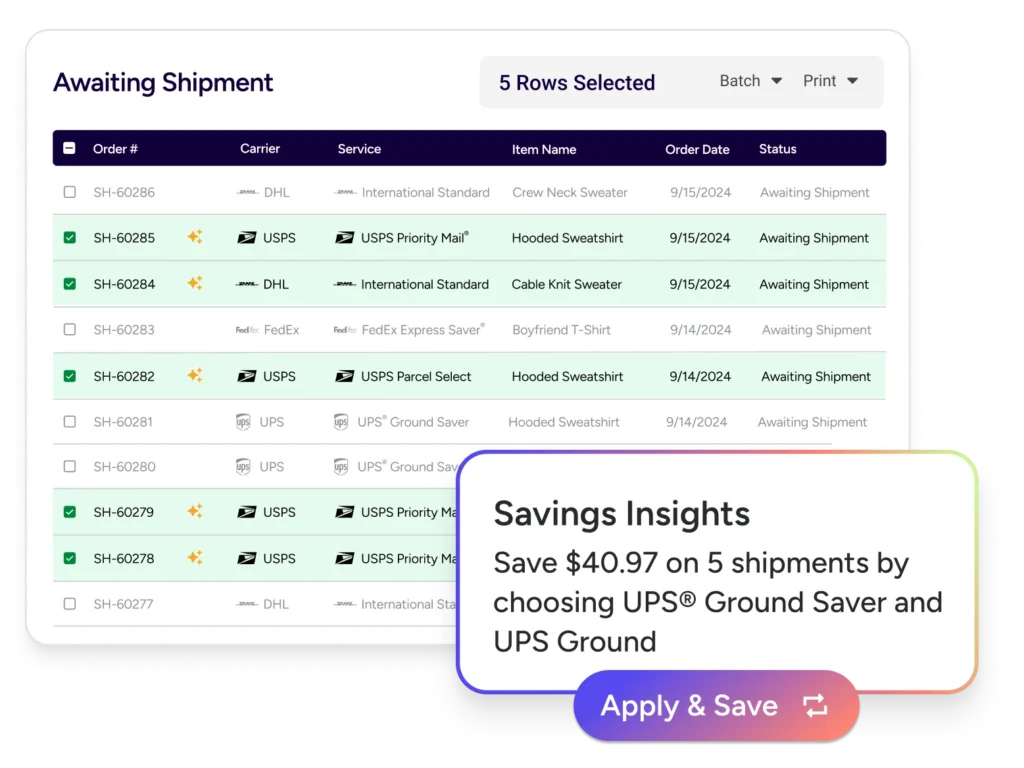
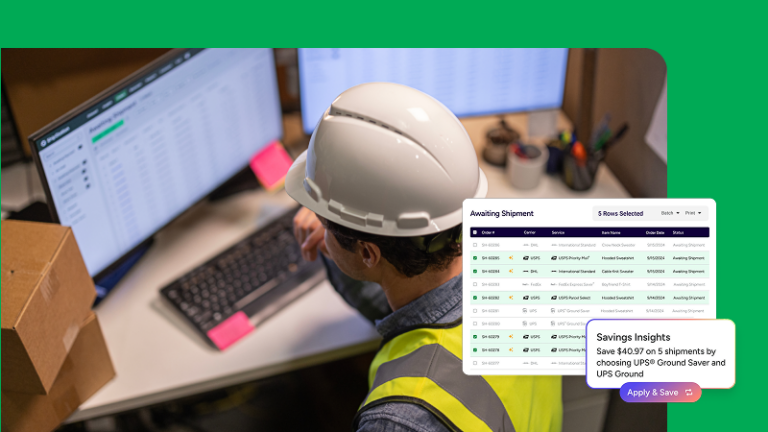
At its core, the process works like this: when an order enters your fulfillment system, the platform instantly evaluates the shipment details—destination, package weight and dimensions, required delivery speed—against real-time rates from multiple carriers and service levels. It then selects the best option based on your predefined criteria. Whether it’s the lowest cost, fastest delivery, or a balance of both, the decision is made instantly and consistently for every shipment.
This is the difference between rate comparison and rate decisioning. Comparison gives you information. Rate decision intelligence takes action. And at scale, that distinction changes everything.
The time saved is not incremental—it’s transformative.
Consider a mid-size ecommerce operation shipping 1,000 orders per day. If each order requires even 90 seconds of manual rate comparison, that’s 25 hours of labor per day dedicated solely to choosing carriers. With automated rate shopping, those 25 hours disappear. Not reduced. Eliminated.
Businesses that have made this shift report creating up to 15 times as many labels per hour as with manual processes. That’s not a marginal improvement—it’s a completely different operating model. Fulfillment teams that once struggled to keep up with daily order volume now find themselves processing shipments faster than orders arrive.
The ripple effects matter just as much. When your team isn’t spending their day toggling between carrier websites, they can focus on the tasks that drive real operational improvement.
Businesses save hours per month just from centralizing order management with built-in rate shopping. For growing operations, those recovered hours often mean the difference between needing to hire additional staff and being able to scale with the team you already have.
Time is one side of the equation. The other is money. This is where automated rate shopping truly earns its keep.
When every shipment is evaluated against multiple carriers in real time, you stop defaulting to a single rate and start consistently finding the best one. Individual savings might seem small, but they add up fast.
One growing ecommerce brand illustrates this well. Spiceology’s fulfillment team previously spent 12 hours each week opening carrier websites, entering shipment details, and selecting services for hundreds of orders across multiple sales channels. Once Spiceology added automated rate shopping into its standard workflow, the brand saw drastic results. During one holiday season alone, the brand saved several thousand dollars by navigating carrier peak-season surcharges with instant rate shopping—savings they would have missed entirely with their previous manual approach.
“ShipStation offers a one-stop shop when it comes to shipping. The ability to not only rate shop, but to have all of your carriers’ rates available within ShipStation in real time, generate all the labels, ship out, and meet all the needs of your customers. There’s no reason for us to use anything else. It has everything we need.”
Ned Woodward, Director of Logistics and Fulfillment, Spiceology
Automated rate decisioning factors in the full cost picture: base rates, surcharges, fuel adjustments, residential delivery fees, dimensional weight pricing, and service guarantees. A human under time pressure might focus on the posted rate and miss the surcharges. An automated system evaluates the total cost every time without shortcuts.
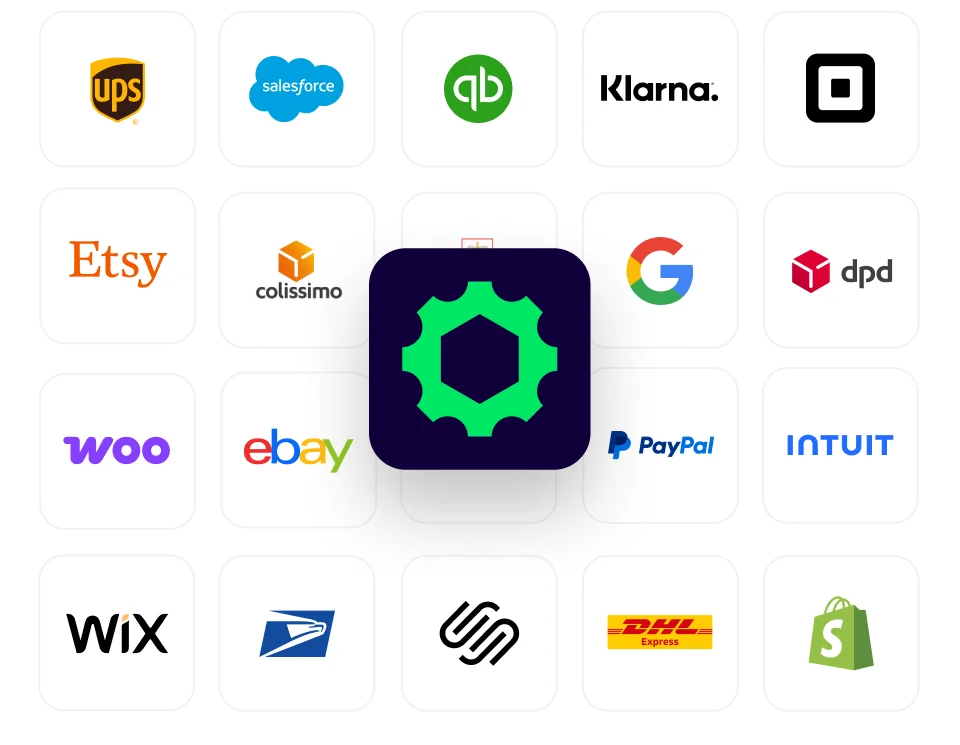
Businesses with access to discounted rates across a broad carrier network, such as UPS, USPS, FedEx, DHL, and Royal Mail, see the biggest gains. When your system can compare options from dozens of carriers—including negotiated discounts of up to 80% to 90% off published rates—the savings potential on every label is significant.
There’s a subtler benefit to automated rate shopping that often gets overlooked: consistency. When humans make rate decisions, quality varies depending on who’s working, how busy they are, and how many orders are in the queue. Some are meticulous rate shoppers; others default to the familiar carrier because it’s faster. Automation eliminates those discrepancies.
This consistency also improves delivery performance. When your rate shopping logic accounts for carrier reliability and transit time—not just price—you create a more predictable experience for customers. The right carrier gets matched to the right shipment based on what actually matters for that order.
For businesses operating across multiple sales channels, this becomes even more critical.
Not all rate shopping tools are created equal. Some simply display a rate comparison table and still require a human to make the final selection. Others fully automate the decision.
If you’re evaluating solutions, there are a few capabilities that separate rate comparison tools from true rate decisioning platforms:



There’s an irony in how many ecommerce businesses approach shipping. They invest heavily in marketing to acquire customers, optimize their websites for conversion, and obsess over product quality, but fail to improve the manual, inefficient shipping process that bleeds time and money on every order.
Intelligent, automated rate shopping flips that equation. It turns shipping from an operational chore into an optimized, data-driven process where every label reflects the best available decision at that moment. The time savings are immediate. The cost savings compound with every shipment. And the consistency gives your customers a more reliable delivery experience that drives repeat business.
The businesses that are winning at fulfillment right now aren’t the ones with the biggest teams or the deepest carrier discounts. They’re the ones that automate decisions.
The gap between manual and automated rate decisions widens with every shipment. If your team is still toggling between carrier websites, the savings you’re missing today are compounding into real money by next quarter. The sooner you make the shift, the sooner every label starts working harder for your bottom line.