Back
Back






































 Carriers & Rates


Returns are one of the most misunderstood aspects of ecommerce. While many retailers view them as a necessary cost of doing business, the smartest brands are recognizing something different: returns are actually a critical touchpoint that can make or break customer loyalty.
The numbers tell a compelling story. According to the National Retail Federation, approximately 17% of all items purchased during the holiday season will be returned in 2025. For online orders specifically, that number climbs even higher to over 19%. These aren’t just transactions being reversed—they’re opportunities to prove your commitment to customer experience.
Here’s what many retailers miss: Jamie Tharp, Director of Marketing at UPS, shared a striking statistic during a recent ShipStation webinar.
“The National Retail Federation conducted a survey in 2025 called the Retail Returns Landscape Report,” Tharp explained. “This one found that 71% of shoppers say a poor returns experience would lead them to be less likely to shop with a retailer.”
Even more concerning? 80% would tell their friends and family about a negative return experience. In the age of social media and online reviews, that kind of word-of-mouth can spread fast.
The question isn’t whether you’ll face returns this holiday season. The question is: will you be ready to turn them into competitive advantages?
Consumer expectations around returns have evolved dramatically. Drawing insights from recent industry research, three clear priorities emerge: speed, cost, and convenience.
Customers expect immediate refunds once items are sent back and received by the retailer. They want drop-off locations near their home or work. And increasingly, they don’t want to deal with printing labels at home.
Perhaps most striking: 57% of shoppers say they would decide not to shop with a retailer after being charged for a return. And according to ShipStation’s Breaking Benchmarks report, 69% of consumers are willing to switch brands for more convenient delivery or return options. Your returns policy isn’t just a post-purchase consideration—it’s a competitive differentiator.
Traditional returns processes create multiple points of friction. Customers need to find packaging materials, locate tape, search for a printer, and then determine how to get the package to a carrier. Each of these steps represents an opportunity for frustration—and for customers to abandon the process altogether.
“72% of shoppers are more likely to shop with a retailer that doesn’t require a box or a label for returns,” Tharp noted. “So yeah, that’s a lot. And we established that shoppers want fast, free, and easy. So I think that really speaks to the easy component.”
This insight has driven significant innovation in the logistics industry, with carriers developing new solutions to eliminate these friction points.
The evolution of returns technology is making it possible to deliver the frictionless experience customers expect. Modern returns solutions now offer:
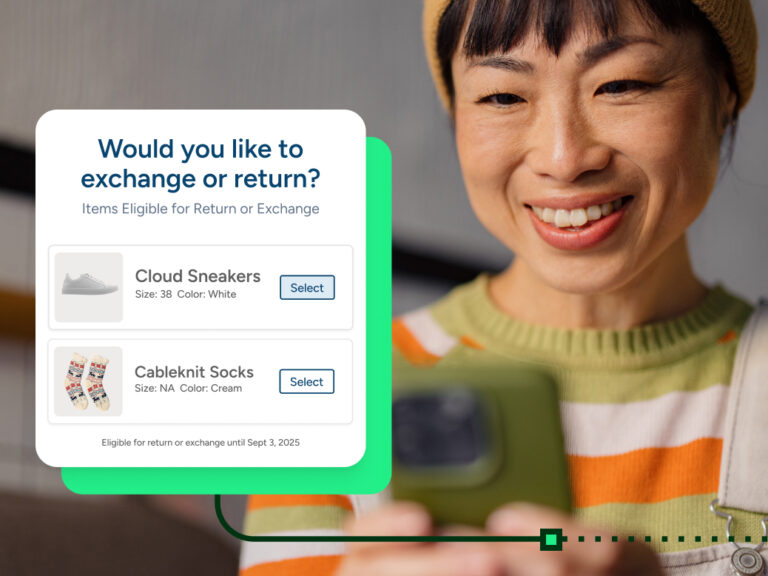
Self-service portals that let customers initiate returns on their own timeline, saving support teams countless hours on phone calls and emails while giving customers control over the process.
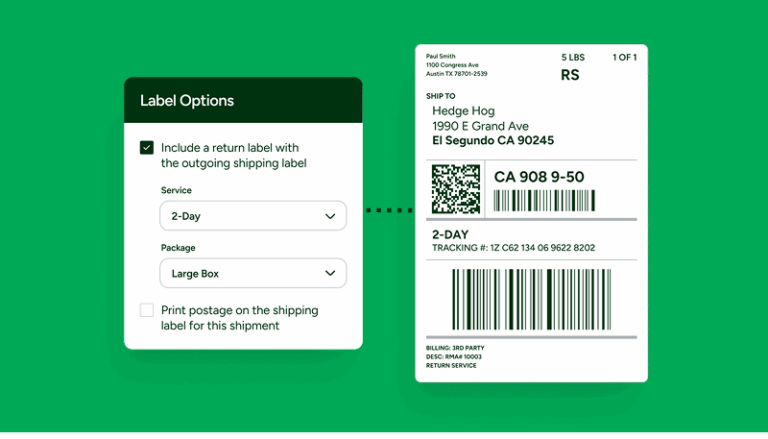
Flexible return methods that accommodate different customer preferences—from traditional print-at-home labels to QR code-only options for those who want to reuse original packaging.
Trackable return reasons that help identify trends and improve product listings. If items are consistently returned due to sizing issues, it’s time to update the size charts. Quality concerns? Address them with suppliers before they impact more sales.
Exchange capabilities that keep revenue in your business. Gabi Pritchard, Product Marketing Manager at ShipStation, emphasized this opportunity:
“If you offer an exchange, you could retain up to 30% of your sales, which is huge,” Pritchard said.
With the right approach, retailers can turn potential refunds into exchanges for different sizes, colors, or alternative products.
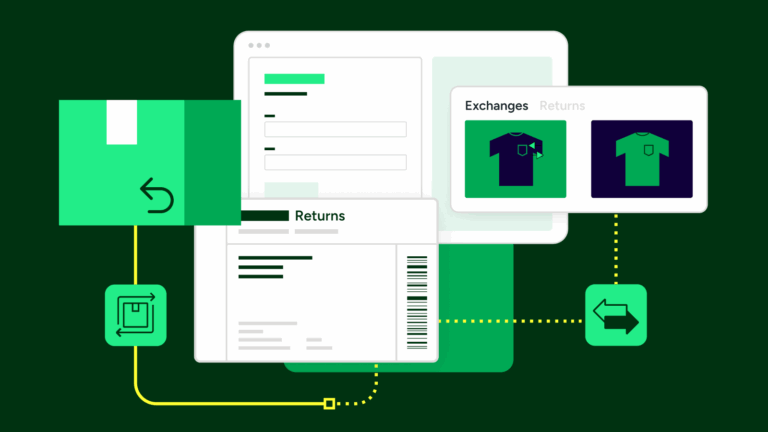
Solutions like ShipStation’s Returns feature integrate these capabilities into existing workflows, allowing retailers to manage returns with the same efficiency as outbound shipments. The feature is available on Standard and Premium plans and includes brand customization options to maintain a consistent customer experience throughout the returns journey.
Businesses are already seeing results. Laura Lyons, founder of Allure Wedding Jewelry, noted the impact on her customer experience.
“Their [ShipStation’s] newly released returns portal has the look and feel of top online stores,” Lyons said. “It’s easy to set up and provides your customers with a top-notch experience.”
For wedding jewelry buyers who need to coordinate with wedding parties or see items in person before the big day, having a professional returns experience builds the trust that drives purchase decisions.
One of the most significant innovations in returns comes from a groundbreaking new partnership.
“UPS and ShipStation are partnering together to launch UPS’s No Box No Label required service next month,” Tharp said. “So this is really exciting. And I’ll also note that ShipStation is our first partner platform that we’re partnering with to offer this on.”
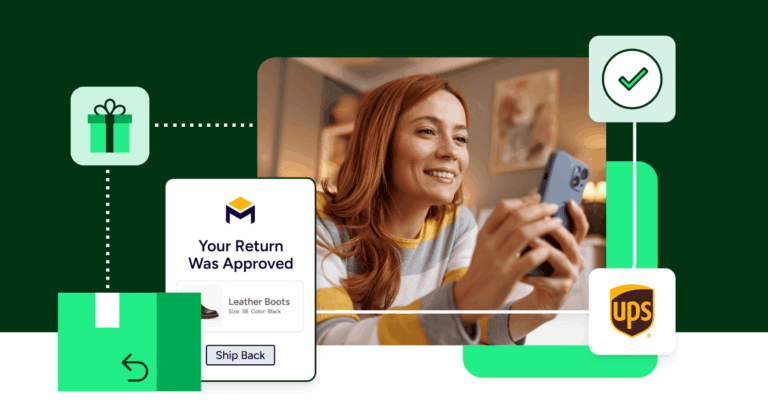
This service eliminates the need for both boxes and printed labels. Customers simply receive a QR code on their phone and bring their item to any participating UPS location—no packaging materials or printer required.
The convenience factor is substantial. UPS has over 5,400 U.S.-based The UPS Store® locations, providing a convenient drop-off option for packages. A store is accessible to 86% of the U.S. population within a short distance, and many are open on Sundays.
The lack of printer ownership makes this particularly relevant.
“70% of Americans do not own a printer,” Pritchard noted. “And as you go by generation, going all the way to Gen X, and Gen Z, that just plummets down.”
ShipStation’s integration with UPS No Box or Label Required makes this option available to retailers of all sizes, democratizing access to the kind of returns experience that previously only enterprise retailers could offer.
Savvy retailers are leveraging returns data to gain insights that enhance their entire operation. By tracking why customers return items, patterns emerge that inform:
This intelligence is only available when you have systems that effectively capture and organize return data.
The modern returns experience needs to accommodate different customer preferences and situations. A working parent values evening and weekend drop-off hours. A Gen Z shopper expects everything to be manageable from their phone. A small business owner appreciates time savings.
By offering multiple return methods—print at home for those who still have printers, QR code only for those who want to reuse packaging, and no box/no label for ultimate convenience—retailers can serve diverse customer needs without adding operational complexity.
Returns are no longer optional in ecommerce. They’re an expected part of the customer journey. But they don’t have to drain resources or frustrate customers.
The most successful retailers approach returns as:
Returns season is approaching fast. The retailers who thrive won’t just have the best products—they’ll deliver effortless experiences at every touchpoint, including returns and exchanges.
As consumer expectations continue to evolve, the gap between retailers with modern returns capabilities and those still relying on outdated processes will only widen. The question is: which side of that divide will your business be on?
Transform returns into revenue with automated exchanges, branded self-service portals, and the most convenient drop-off options your customers have ever experienced. Learn more about ShipStation Returns or start your free 30-day trial today.