




























July 17 is a pretty important day. Because it's not just David Hasselhoff’s and Donald Sutherland’s birthday.
By
James Messer
Last Updated Mar 19, 2026 – 2 min read
Turn shipping into your competitive advantage with intelligence that improves with every order.
Explore Intelligence
Turn shipping into your competitive advantage with intelligence that improves with every order.
Explore Intelligence
Turn shipping into your competitive advantage with intelligence that improves with every order.
Explore Intelligence
Turn shipping into your competitive advantage with intelligence that improves with every order.
Explore Intelligence
We're ready to answer any questions you may have about ShipStation API.
Talk to an Expert
We integrate with how you do business. Move fulfillment onto a single platform that scales with your shipping needs.
Explore All Integrations
We integrate with how you do business. Move fulfillment onto a single platform that scales with your shipping needs.
Explore All Integrations
We integrate with how you do business. Move fulfillment onto a single platform that scales with your shipping needs.
Explore All Integrations
We integrate with how you do business. Move fulfillment onto a single platform that scales with your shipping needs.
Explore All Integrations
We integrate with how you do business. Move fulfillment onto a single platform that scales with your shipping needs.
Explore All Integrations
After the NFL adopted their concussion-reducing Guardian Cap, this Atlanta-based sports safety company saw orders explode to 400 per day—and the team’s manual processes couldn’t keep up.
Read the Customer Story
The conclusion is clear: AI is already influencing demand, competition, and delivery performance—and retailers that fail to adapt risk being excluded from AI-led shopping journeys altogether.
Get the Report
The conclusion is clear: AI is already influencing demand, competition, and delivery performance—and retailers that fail to adapt risk being excluded from AI-led shopping journeys altogether.
Get the Report
The conclusion is clear: AI is already influencing demand, competition, and delivery performance—and retailers that fail to adapt risk being excluded from AI-led shopping journeys altogether.
Get the Report
July 17 is a pretty important day. Because it's not just David Hasselhoff’s and Donald Sutherland’s birthday.
July 17 is a pretty important day. Because it’s not just David Hasselhoff’s and Donald Sutherland’s birthday. It’s also World Emoji Day!
When Apple enabled the emoji keyboard on iOS devices in 2011, emojis had already been popular in Japan for over a decade. But once westerners had access to these little pictographs, emoji use increased exponentially.
In 2014, Jeremy Burge, emoji aficionado and founder of Emojipedia, declared July 17 World Emoji Day. Burge set July 17 as the date because it’s the date displayed on the original Apple iCal icon.
Recently, more and more brands have begun incorporating emojis into their marketing campaigns. So we decided to celebrate these modern hieroglyphs and their impact on the brand-consumer relationship.
Here are 15 awesome facts about emoji marketing.
→ May 2015 – Domino’s creates a “tweet-to-order” system where customers can order pizza by tweeting Domino’s with the pizza emoji.
→ June 2015 – After amassing nearly 33,000 signatures on its Change.org petition, Taco Bell announces a taco emoji has been added to the Unicode Standard.
→ November 2015 – Oxford Dictionaries declares the “Face with Tears of Joy” emoji to be its Word of the Year.
→ More than 60 million emojis are used on Facebook every day.
→ And in Q3 2017, over half of the most popular Facebook headlines contained an emoji.
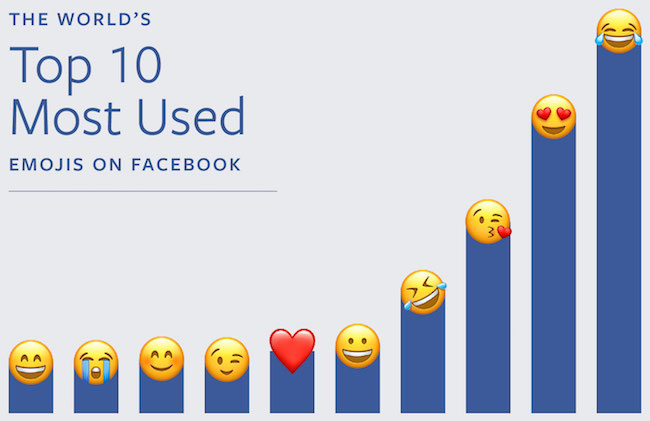
(Source)
→ Nearly 60% of the top 500 brands on Twitter use emojis in their tweets.
→ Furthermore, tweets with emojis earn 25% higher engagement than tweets without.
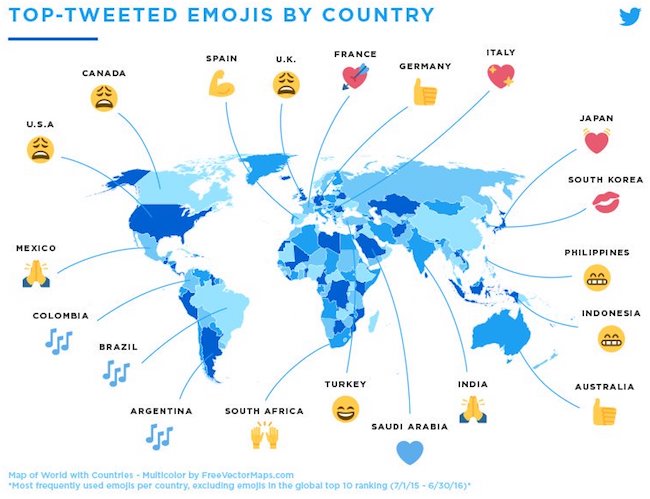
(Source)
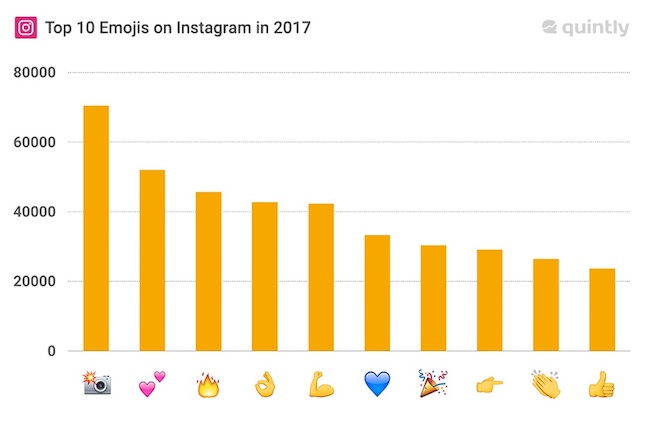
→ Over 55% of all Instagram accounts use emojis.
→ Instagram posts with emojis get 47.7% more interactions than posts without emojis.
(Source)
→ Push notifications that contain emojis have an 85% higher open rate than push notifications that don’t.
→ B2C messages with emojis are 4x more likely to elicit a response than an emoji-less message.
→ Including emojis in mobile consumer surveys can lower drop-off rates and improve survey satisfaction. Consequently, using emojis won’t hurt data quality.
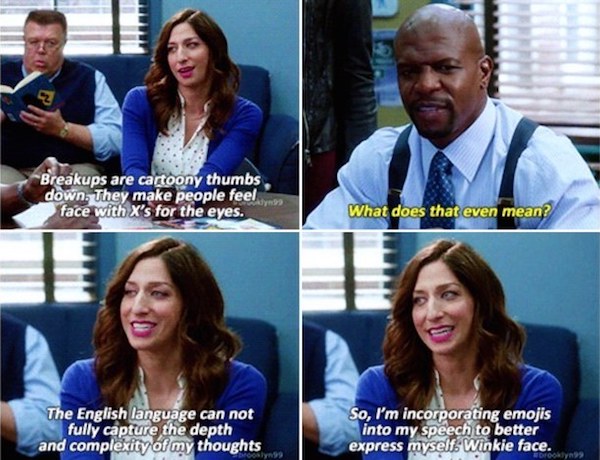
What are your experiences with emoji marketing? We’d love to hear your take. Leave us a comment, post on our Facebook, or Tweet at us!

James Messer is a copywriter specializing in shipping, logistics, and ecommerce.