Back
Back





































Norman Love Confections Makes Beautiful Chocolates. Shipping Them Is Another Art Form.


Inside the fulfillment operation keeping up with one of America’s most celebrated chocolate brands
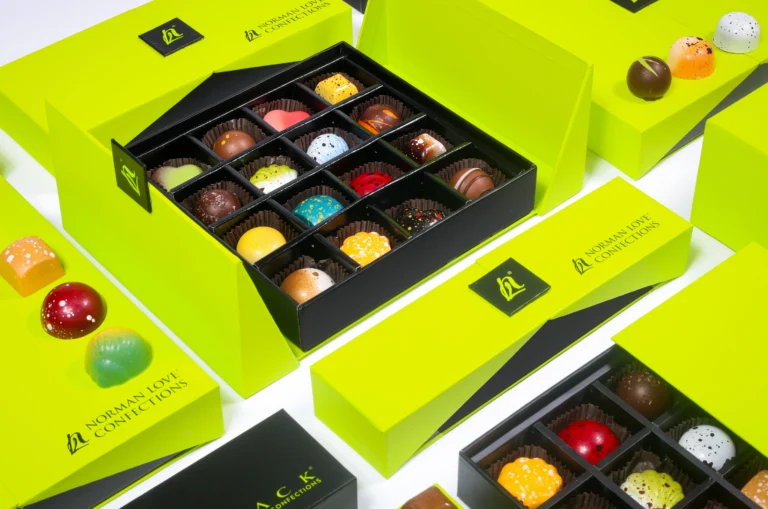
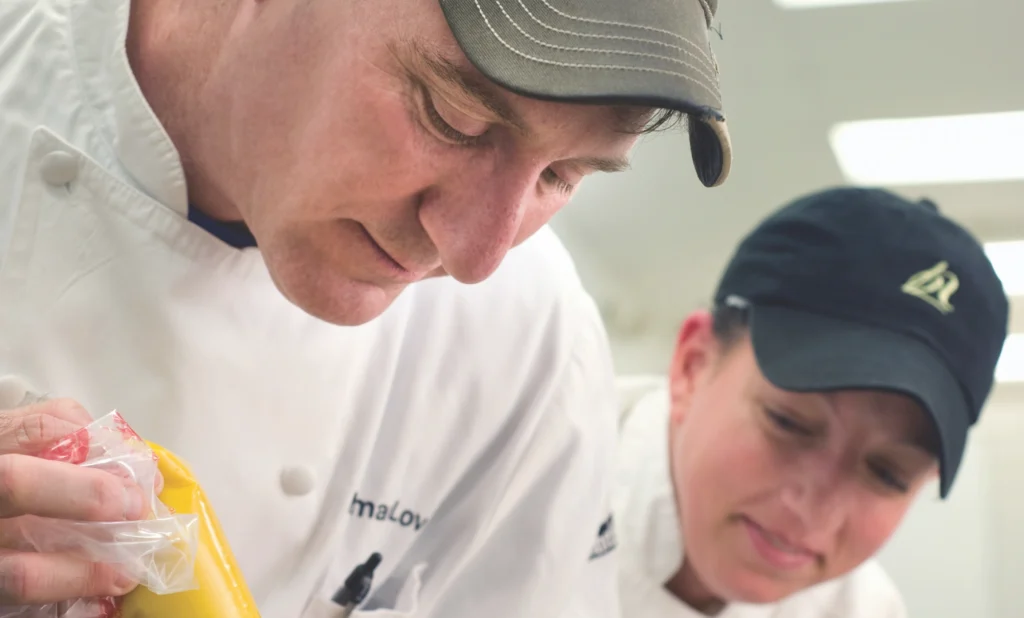
Every spring, Norman Love Confections‘ fulfillment team faces one of the harder problems in shipping perishable products. The mission: get handpainted chocolate eggs—fragile, perishable, packaged in a signature lime-green box that doubles as part of the gift—from a production facility in Fort Myers, Florida, to customers across the country. On time. Intact. Perfect.
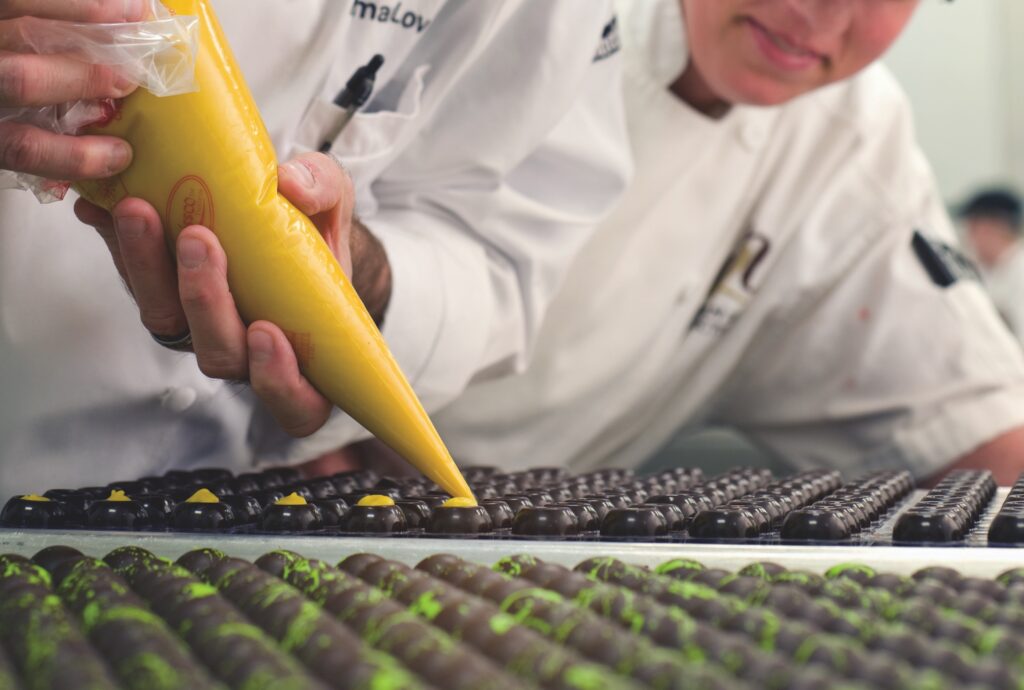
The 2026 Easter Collection features speckled bon bons in sage, spring pink, and robin’s egg blue, filled with flavors like Passion Cream and Pistachio alongside classics like Caramel Cream and Hazelnut. Each piece is individually handcrafted. There are no preservatives. There’s a narrow ship window. And during the weeks leading up to Easter Sunday, the team might process thousands of orders a day.
It’s the kind of operational challenge that makes choosing the right shipping platform feel less like a vendor decision and more like a core business decision.
Not just a holiday brand—though the holidays are serious business
Christmas is real. Norman Love Confections will tell you that directly—the sustained surge from Thanksgiving through early January is the single biggest peak of the year, no question. But the brand has spent 25 years building something that extends well beyond December.
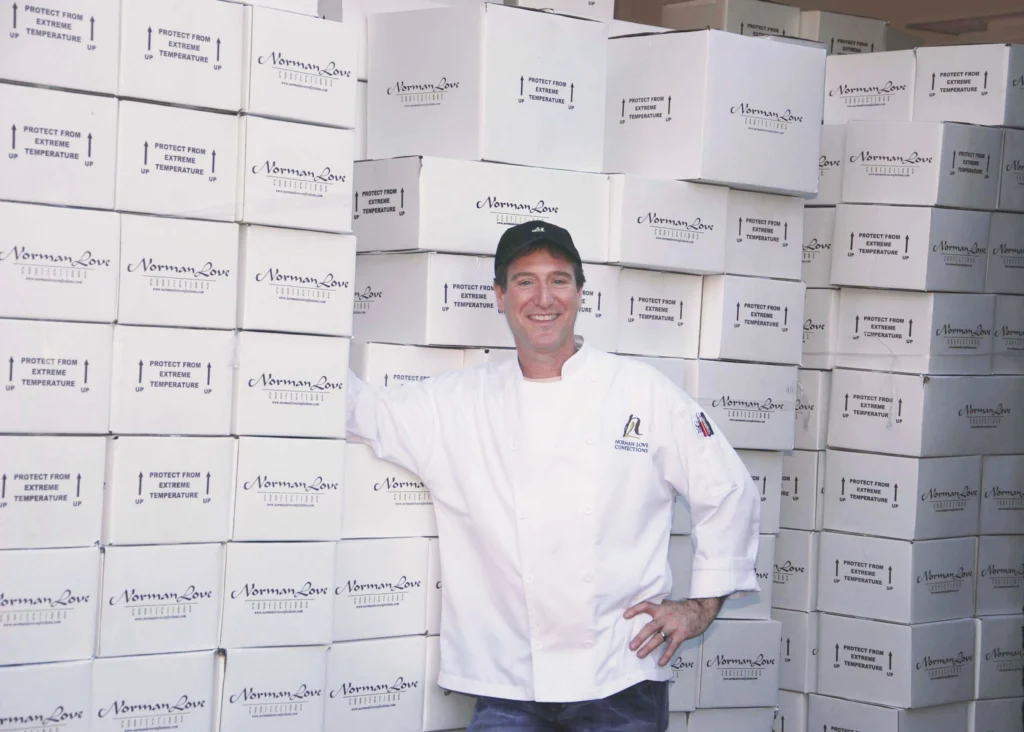
Founded in 2001 by Chef Norman Love—formerly the Corporate Executive Pastry Chef for The Ritz-Carlton Hotel Company—the brand was originally conceived as a wholesale business serving the restaurants and hotels Chef Love knew from his hospitality career. That plan lasted about two months. After USA Today named the flagship Fort Myers location one of the top 10 artisan chocolate shops in the country for Valentine’s Day, consumer demand made the decision for him.
Today, Norman Love Confections operates eight retail chocolate salons across Southwest Florida, two production facilities, and a 20,000-square-foot packaging and fulfillment center. It’s been named the best ultra-premium chocolates in the nation six times, appeared twice on lists of the Top 10 Best Chocolate Shops in the World, and earned features in National Geographic, Forbes, The Today Show, and O The Oprah Magazine, among others. Chef Love was the first-ever inductee into the Chocolatier Hall of Fame.
And the shipping volume? It has grown from a few thousand shipments a year to more than 76,000 annually.
Getting there required building a fulfillment operation that could handle not one peak season, but five. Valentine’s Day. Easter. Mother’s Day. Halloween. And then the sustained holiday surge.
“The periods between those peaks are when we plan, build inventory, and prepare for the next surge,” said Rick Murray, Director of Operations.
What shipping perishable products actually demands
Shipping perishable products is one of the hardest categories in ecommerce fulfillment—and for Norman Love Confections, it comes down to three variables that are unforgiving in combination: temperature, presentation, and timing.
Temperature is the most obvious constraint and the most logistically complex. The company ships from one of the warmest regions in the country, using the most premium ingredients available: fresh fruits, butter, aromatic spices, the finest chocolate. No preservatives. No shelf-stable shortcuts. During warmer months, every shipment requires gel packs, and the number of gel packs varies by box size. Getting cold chain integrity right means constantly balancing protection against shipping weight and cost.
Presentation is where the stakes get quietly high. A 25-piece gift box retails between $58 and $65. Customers are buying these as gifts. The unboxing experience is part of what they’re paying for.
“If a piece cracks from rough handling in transit, or a chocolate shifts and gets scuffed, the presentation is compromised and we’ve failed the customer even if the product tastes perfect.”
Rick Murray, Director of Operations, Norman Love Confections
The packaging has been engineered specifically to withstand carrier handling while maintaining a luxury feel—a detail that took real development to get right.
Timing pulls everything together. Because shelf life is short and temperature sensitivity is real, there’s a precise window in which each order needs to leave the facility and arrive at the door. An extra day in a hot distribution hub can compromise an entire shipment. During peak, when the team might process more than 10,000 orders in a single day, the margin for error is essentially zero.
From disconnected tools to an operational hub
Before ShipStation, Norman Love Confections managed its shipping operation the way many growing businesses do: through a patchwork of carrier tools, manual data entry, and disconnected systems. Labels printed through FedEx’s online portal. Orders managed across platforms that didn’t talk to each other. The team had no centralized view of what was actually moving through the facility.
As the company scaled from a few thousand shipments toward tens of thousands, that approach hit its ceiling.
“There wasn’t a centralized platform tying our order sources together with our carrier and our fulfillment workflow,” Murray said. “Every manual touchpoint is an opportunity for error.”
The team moved to ShipStation roughly seven years ago, and the core of what changed was automation. Orders flow in from the ecommerce storefront and other channels and are routed automatically through Automation Rules. Those rules assign the right service, package dimensions, weight, and fulfillment flags—how many gel packs based on box size, whether the order needs a gift message card, which disclaimer cards to include—without anyone configuring each order manually.
The team generates daily pick lists by querying ShipStation data: exactly how many of each product, each box size, and each consumable they need for that day’s volume. Labels batch-print in bulk.
“Without ShipStation’s batch tools and Automation Rules, our team would spend hours each day manually configuring individual shipments. During peak season when we might process 10,000+ orders in a day, that would be physically impossible with our current team size.”
Rick Murray, Director of Operations, Norman Love Confections
Analytics in action
What separates Norman Love Confections’ use of ShipStation from a typical label-printing workflow is what happens after the data is captured.
“ShipStation isn’t just a label printer for us—it’s the operational hub that connects our ecommerce storefront, our data warehouse, and our carrier in one workflow,” Murray said.
That integration runs deep. The company syncs ShipStation shipment data into a broader data warehouse, where it powers BI dashboards alongside data from its sales platforms. The result is end-to-end visibility that simply didn’t exist before:
- Shipping cost per order by service level
- Carrier surcharge trends over time
- Box size configurations driving the most volume
- Fulfillment patterns across peak periods for staffing and materials forecasting
One of the most concrete applications is a dynamic materials reorder system built entirely on ShipStation data. Instead of guessing how many boxes, liners, gel packs, and gift cards to order, the team calculates usage rates from actual shipment records—how many of each box size shipped, how many gel packs that implies, how many gift cards based on gift-flagged orders—and sets automatic reorder points based on vendor lead times and safety stock. It converts shipping data into supply chain intelligence.
“The analytics side has been transformative for us,” Murray said.
The value of real data at the contract table
“For a brand shipping perishable, premium products from Southwest Florida to customers across the country w, FedEx gives us the service level mix we need,” Murray said. “We use FedEx for time-sensitive deliveries where we need guaranteed transit times to protect product quality.”
ShipStation made that relationship more valuable.
“Being able to see actual cost data by service level, analyze surcharge impact, and compare shipping costs across our box sizes gave us real leverage in contract negotiations,” Murray said. “ShipStation has absolutely made it easier to get the most out of that relationship.”
76,000 shipments. Roughly the same team.
For any operation built around shipping perishable products, scaling without proportionally scaling the team is the goal. And for Norman Love Confections, that ratio is striking.
The business has grown from fewer than 5,000 shipments a year to more than 76,000, roughly 15x, without proportionally scaling its fulfillment team. Automation Rules absorbed what would otherwise have been thousands of manual configuration decisions per day. Batch label printing saves two to three hours of labor per day during peak season—more than 100 hours across a six-week holiday surge. That’s two to three seasonal hires the company never had to make.
Error reduction has been similarly significant. Before automation, every order was a manual decision with multiple opportunities to select the wrong service level, enter the wrong dimensions, or apply the wrong weight. Those errors are now effectively eliminated for standard order types.
“For a company our size—not a massive enterprise—ShipStation hits a sweet spot where it’s powerful enough to support complex automation and analytics but accessible enough that our team can actually use it day-to-day without dedicated IT staff running the platform,” Murray said.
Shipping is part of the brand
Chef Love famously put bright lime green on chocolate boxes when everyone told him he couldn’t do that. The aesthetic choice became a brand signature—a signal that Norman Love Confections would do things its own way, and do them beautifully.
That same standard extends to how the product ships. A cracked chocolate is a brand failure. A late delivery during Valentine’s week is a brand failure. A gift that arrives with a smudged presentation is a brand failure—even if the chocolate itself is perfect.
“Don’t underestimate how much your shipping operation defines your customer experience. In premium food and gifting, the product might be perfect when it leaves your facility, but the customer’s experience is defined by how it arrives. That means your shipping platform isn’t just a back-office tool—it’s part of your brand.”
Rick Murray, Director of Operations, Norman Love Confections
For a company processing 76,000+ shipments a year across five peak seasons, that’s not a philosophy. It’s an operational requirement.
Your shipping platform is part of your brand. Make sure it’s working as hard as you are. Start your free trial.