Back
Back







































 Technology & Integrations


Scaling operations for your growing business requires good platforms. This is where an Enterprise Resource Planning (ERP) system comes in. Too frequently, businesses work across multiple platforms, interfaces, and have to manually track data between them. An ERP gives you the tools and resources you need to manage business operations within one platform. They can have many different tools and features that you and your teams use, but the centralized hub for your business’s needs will greatly increase productivity and accuracy. Most importantly, they can scale with your evolving business needs. While you don’t have to be an enterprise business to benefit from an ERP system, you can grow into their fuller suite of features as you need them. So, finding the right solution early is crucial. There are several symptoms your business may face as you ramp up to choosing an ERP. These are the biggest ones to be aware of.
ERP systems integrate various departments and functions within an organization, such as finance, human resources, supply chain, manufacturing, and customer relationship management. By consolidating data and processes into a single system, an ERP helps streamline operations, improve communication, and eliminate data silos.
ERPs provide dashboards and reporting capabilities that offer a holistic view of business operations across departments—removing the need to build integrations between platforms for your own reporting systems. These dashboards can be customized to display relevant information for specific departments, enabling them to track performance, monitor key metrics, and share insights with other departments. This shared reporting functionality enhances communication by providing a common understanding of business performance and goals.
Because ERPs integrate different processes into a single system, they also help eliminate manual and repetitive tasks—reducing the time and effort required to perform them. This leads to increased efficiency and productivity across the organization. Employees can focus on higher-value activities instead of spending time on administrative tasks.
ERPs provide real-time access to accurate and up-to-date data across the organization. This visibility enables better decision-making at all levels. Managers can generate reports, analyze trends, and gain insights into various aspects of the business.
With an ERP system, customer-related information is centralized and accessible to different departments. This ensures a seamless flow of information and better customer service. Sales, marketing, and customer support teams can access customer history, preferences, and order status, enabling them to respond promptly and effectively.

ERP systems offer tools for effective supply chain management. Some of these tools include inventory control, procurement, and demand forecasting. These help businesses optimize inventory levels, reduce stockouts, and minimize carrying costs. Streamlined supply chain processes lead to improved supplier relationships and better customer satisfaction.
Many ERP systems even incorporate features to assist with regulatory compliance. They can help with financial reporting, auditing, and adhering to industry-specific regulations. This ensures businesses operate within legal frameworks and reduces the risk of non-compliance penalties.
ERP systems provide end-to-end visibility into the supply chain. This includes tracking materials, components, and finished goods as they move through the supply chain. With real-time data on the status and location of inventory, businesses can proactively manage their supply chain, identify bottlenecks or delays, and take appropriate corrective actions. This improves efficiency and reduces costs associated with delays or disruptions.
ERP systems offer robust inventory management capabilities, allowing businesses to track and manage their inventory in real-time. This includes functions such as inventory control, stock tracking, and reorder point calculations. By having visibility into inventory levels, businesses can optimize their stock levels, reduce carrying costs, and avoid stockouts or overstocking.
As a business grows, it becomes crucial to have a system that can scale with you. ERP systems are designed to handle increased transaction volumes, additional user logins or licenses, and evolving with business operations. They offer flexibility to adapt to changing business requirements and support customization options. ERP systems are designed to support scalability and handle heavy data volumes. They provide a robust framework to accommodate growth, whether it’s adding new users, locations, product lines, or business units. Scalability and growth support: As a business expands, its operations become more complex.

While the initial investment in an ERP system can be significant, it often results in long-term cost savings. All of these efficiencies and scalable solutions listed are to improve interdepartmental communications, ease your team’s workload, simplify ordering and supply chain management, and centralize reporting and work. By automating processes, eliminating redundancies, and improving efficiency, businesses can reduce operational costs. Additionally, better inventory management, procurement practices, and resource utilization can lead to significant savings over time.
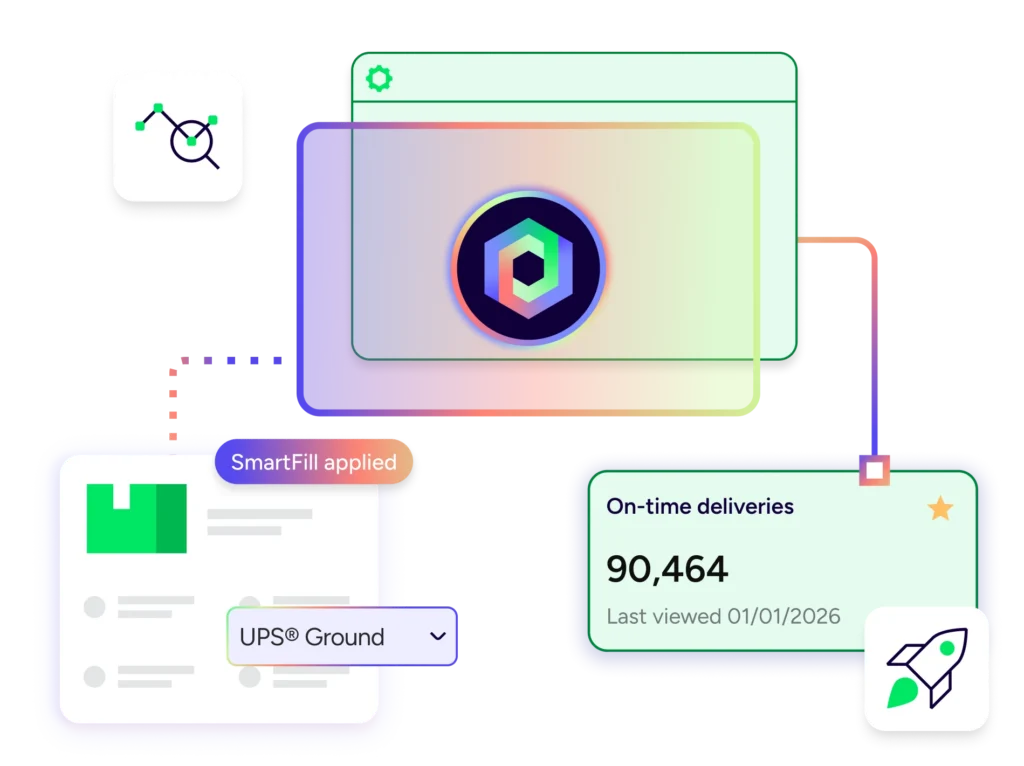
ERP systems help organizations centralize their workflows. Similarly, ShipStation lets you manage and generate shipments for orders across all your platforms: selling channels, warehouses, order sources, ERPs, ORMs, system connectors, you name it!
If you need help managing your shipping, ShipStation works great alongside ERPs to make parcel delivery simple.