Back
Back


































 Shipping Basics


After checking out the main three elements that set Zappos’ e-commerce returns policy above the rest, what can you do to improve your own policy? While you may not be able to compete with a company the size of Zappos, you don’t actually have to: you just have to set yourself apart from your own competitors and handle your returns like the pro you are.
While we’ll definitely give you suggestions below, we’ll also ask a lot of questions that only you can answer. No one policy will work for everyone, so take the time to think through these questions.
Since it was Zappos’ returns policy we examined, we’re going to refer back to them in each section.
What’s your current timeframe for accepting returns? Is it a couple of weeks from receipt of the package? Maybe a month? Less than both? That needs to change (unless your product is perishable).
Think of your returns timeframe more as your mark of confidence—you believe in your product so much, you’re willing to offer returns for X days. Think of it this way: if you’re shopping online and find two similar products from two different stores, are you going to buy the one with the 14-day returns policy or the 60-day returns policy? Definitely that 60-day policy! That’s freedom to the customer.
Around the holiday season, it’s always smart to extend that timeframe. After all, a lot of folks are buying gifts that may not be immediately received and even then, may not be immediately used.
We recommend something in the ballpark of 60-90 days during most of the year and bumping that out even longer around the holidays. Again, this needs to be contingent on what you sell, but also the condition in which it’s coming back to you.
When are your customers allowed to return something? What circumstances need to be met for a return to be successfully granted and a refund issued? What you need to determine here is what qualifies a return. Are sale items exempt from returns (unless the product is damaged)? What if the tags are removed or the product has been removed from its packaging?
Maybe you want photos of the package as it arrived and the product itself are required if the customer states it’s damaged. Most apparel has a caveat along the lines of this: “Never worn, in its original condition.” That means if you get it back and there’s a giant ice cream smear, you don’t have to accept the return.
So what are your product’s caveats, if any? If you have limitations for returns, this is where you need to state them. No customer wants to be surprised with criteria after they’ve initiated the process.
This one is specifically for you and less for your customers. What shipping service are you going to use to get your product back to you? How important is speed in this instance? What about tracking?
Slower is cheaper but too cheap means no tracking. We always recommend tracking—either you should have the product or your customer should. FedEx and UPS Ground are good for returns and so is USPS Parcel Select.
This is a big one: how do you want to handle requests to return a product? The tried and true method comes down to your customer contacting you in some way—support ticket, chat, email, phone call—to receive approval on a return.
Depending on whether or not you need proof for the reason of return (damaged upon receipt, for example), you might be able to completely bypass this step. So instead of playing email tag, tying up your resources while you and the customer wait for responses, we recommend customer-initiated returns.
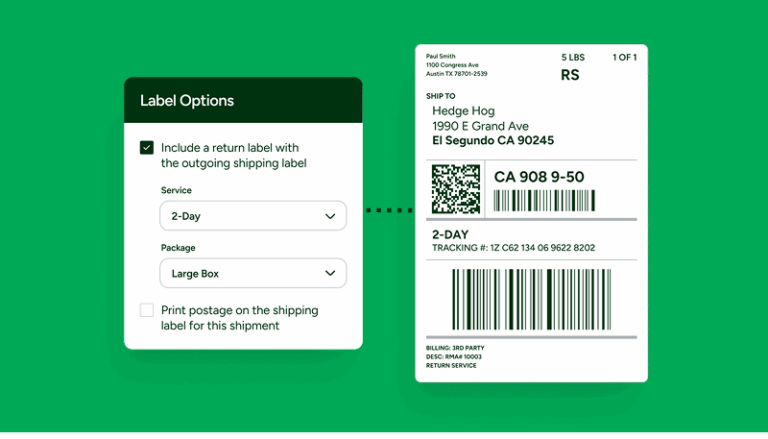
Customer-initiated returns means you are hands off. Zappos, for example, has their customers log in to their Zappos account. From there, customers create a returns label pretty quickly. No interaction with a support team, no lag in email responses or returned calls. Just a return label and the instructions on how to proceed.
You may not be Zappos but you can still implement customer-initiated returns into your strategy. ShipStation’s Branded Returns Portal gives you two choices on handling returns:
It bears repeating that whatever you do has to work for you and your products. Work in elements from our piece on making returns cost-effective and you’ll turn e-commerce returns from a negative into a big, big win.