



































Small BusinessesStart small, think big. Elevate your small-business shipping today.
Start Shipping in MinutesStart shipping instantly with a simple setup. Buy and print labels in minutes with no training needed and no unnecessary steps.
Automate and ScaleSave time with rules that batch, route, and print labels automatically so your shipping keeps up as orders grow.
Save on Every ShipmentAccess exclusive 80% – 90% discounts from every major carrier and cut costs on every label, no matter where you ship.
Connect and CustomizePlug into hundreds of stores, marketplaces, and carriers, or extend ShipStation with custom API integrations built for your business.
Manage Everything in One PlaceManage shipping, inventory, warehouse, tracking, and returns for all your stores and marketplaces in one simple platform.
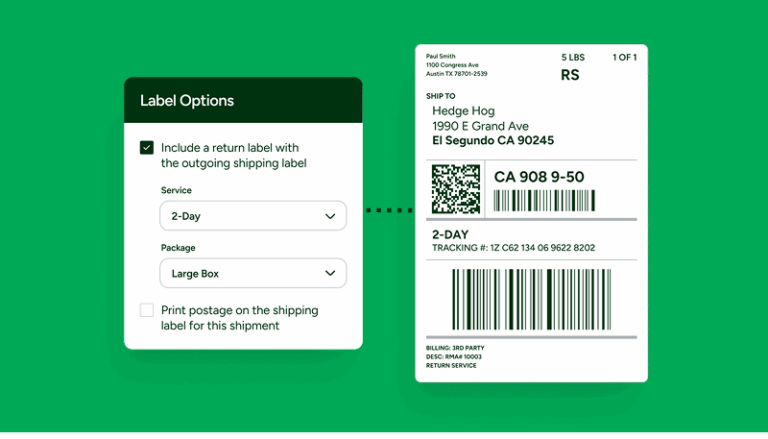
Simplify ReturnsManage returns in one platform with prepaid labels and self-serve features that keep the process fast and frustration-free.
Mid-size and GrowingShip smarter, grow faster. Scale your fulfillment with ease.
Save on Shipping as you ScaleAutomate rate shopping across 200+ carriers, bring your own carrier accounts, and unlock deep volume discounts that grow with you.
Unlock Shipping InsightsAnalyze sales trends, shipping costs, and delivery times in one platform to identify savings, improve efficiency, and keep fulfillment running smoothly.
Centralize Omnichannel FulfillmentManage orders, shipping, inventory, warehouse operations, tracking, returns, and analytics across online stores and marketplaces with one platform.
Automate Order ManagementCombine AI intelligence with rule-based workflows to speed up fulfillment, streamline operations, and eliminate bottlenecks
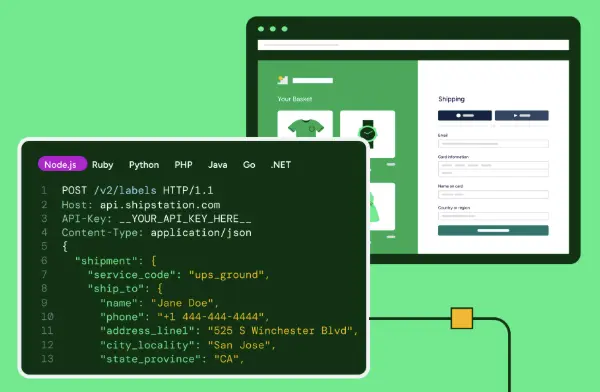
Scale With our APIsExtend your setup using our developer-friendly API for custom automated workflows and insights.
Start with Guided OnboardingOur experts walk you through setup, training, and workflows so your team feels confident and ready to ship quickly.
EnterpriseGlobal scale, local precision. Master shipping at every level.
Lower Shipping Costs at Global ScaleReduce global shipping expenses with real-time rate shopping and discounted carrier rates, helping your enterprise control costs and ship efficiently at scale.
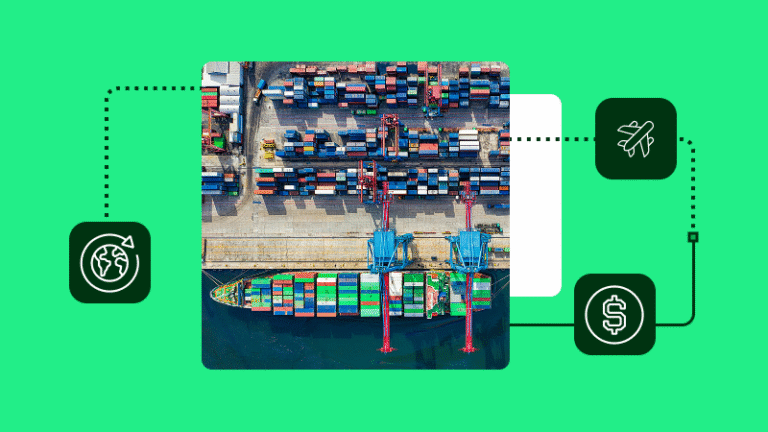
International Shipping Made SimpleEasily manage customs forms, duties, taxes, and tracking while accessing global carrier options from one platform built for cross-border shipping.
Fulfillment APIsCustomize workflows at scale with APIs for consolidating orders across channels, comparing shipping rates, validating addresses, tracking, analytics, and more.
Multi-Location FulfillmentManage inventory, orders, and shipping across multiple warehouses and stores with one platform built for multi-location fulfillment.
Advanced Shipping IntelligenceAccess powerful analytics that reveal trends, track spend, and measure performance to unlock global fulfillment efficiencies.
Dedicated Guidance and SupportCount on 24x7 support plus dedicated onboarding guidance so your enterprise shipping runs reliably from day one and beyond.
How Guardian Sports Used Automated Returns to Scale After Going Viral with the NFL
After the NFL adopted their concussion-reducing Guardian Cap, this Atlanta-based sports safety company saw orders explode to 400 per day—and the team’s manual processes couldn’t keep up.
The conclusion is clear: AI is already influencing demand, competition, and delivery performance—and retailers that fail to adapt risk being excluded from AI-led shopping journeys altogether.
3 International Expansion Tips for Smaller Retailers
This post was contributed by Kenny Johnson of Brightpearl, a provider of omnichannel retail software. Kenny Johnson is a Product Marketing Manager at Brightpearl, focused on producing content to help customers get the most out of Brightpearl and the broader e-commerce landscape.

Selling internationally used to be reserved for only the largest retailers. These companies had enough capital to invest in stores, warehouses, and employees overseas. But thanks to ecommerce platforms and 3rd party fulfillment, smaller companies can expand internationally, too.
International expansion no longer requires a physical presence. Rather, retailers can go global strictly via ecommerce.
The prospect of cross-border selling can be a enticing for a growing business. But you must execute any expansion carefully and at the right pace for your brand. Here are a few key things to think about before making a move toward selling in a new country.
Research if your merchandise has product market fit in the target country.
Brightpearl has an office in Austin, Texas and one in Bristol, U.K. And I can confirm the buying habits of my American and British coworkers differ significantly in some cases.
For example, 80% of the Austin employees drive to work, while less than 40% of the Bristol team does. So a car accessory retailer would have much more success selling to our American employees than our British ones. The culture and infrastructure of a country has a major impact on shopping behaviors and, therefore, your international expansion strategy.
Before you starting shipping to another country, confirm your product would be a good fit in that market. There are a few low cost tips to test product/market fit, including …
Connect with locals and get their feedback.
Look for similar and competitive products. It’s rare to find a completely greenfield opportunity. If similar items are being sold in the market, it helps confirm there’s demand for your product.
Use Google Trends to see if shoppers in that country are looking for items like yours.
Once you know there’s a good opportunity to sell in a new country, the next step is profiling that market.
Find out if you can outperform in-country competitors.
As a non-native company, you’ll have a lot more expenses than your in-country competition. This includes the following:
Cost of international shipping, taxes, and duties
International shipping insurance
Exchange fees (or fees to maintain a foreign merchant services account)
General overhead of time spent dealing with a more complex order
Not having these expenditures gives any in-country competitor an immediate advantage. All things being equal, it could offer the same product for a lower price and maintain an equal or greater margin.
To determine if you can beat any in-country competitors, consider these factors:
Differentiated Offering
Do you have a product of superior quality? Or one that cannot be currently sourced in that country? If so, you can potentially sell at a higher price while maintaining solid demand.
Scale
If your business is larger, you’ll likely be able to beat local competitors in two areas: lower unit costs and tolerance for lower margins.
You can buy larger quantities of your product at a lower unit cost. This helps offset the admin costs of sending a product overseas. Generally larger companies can tolerate a lower margin since their profit is still relatively high. You may be able to offer your product below the competition’s price as you establish a foothold in the new country.
Service and Shipping
Can you provide a comparable or better level of service than in-country competition? Things like language, shipping time, and time difference are all important to consider. Do you have the right technology to manage different currencies, taxes, shipping methods?
You’ve confirmed there’s a market for your product and in-country competition won’t block your growth. Now it’s time to build an execution plan.
Avoid common pitfalls.
I want to offer a few suggestions of common hurdles we see our customers run into as they expand overseas:
Opportunity Cost
Ask yourself: will cross-border growth provide a better return over exclusively shipping domestically? Does your team have capacity to spend more time processing international orders? You must be confident your core domestic operations won’t suffer.
Pro Tip: Solutions like Brightpearl and ShipStation can help decrease the time spent processing both domestic and international orders.
Shipping Carriers
FedEx and UPS may have global reach, but they’re rarely the preferred carrier in other countries. Determine the most efficient and locally-preferred way to ship orders in each of your target countries. International freight forwarders, a third party logistics company, or Fulfillment by Amazon services can also eliminate the stress of choosing a shipping carrier.
Duties
Duties are often forgotten by brands just getting started shipping overseas. And if a customer receives a duty bill days or weeks after shopping with you, she won’t be happy. Clearly call out on your website that a customer may be liable for duty payments. You can also fold them into your international shipping rates.
These are just a few of the areas you should focus on when deciding to make the move overseas. Keep doing your research so you can make confident decisions about your international expansion business plan. Then you can successfully increase your audience to include customers all over the world.