Back
Back










































 Carriers & Rates


USPS shipping costs aren’t fixed expenses. They’re controllable. What you pack, where it goes, and which service you choose all affect your rate. Volume alone won’t lower your costs.
Businesses using retail rates overpay. Those using USPS commercial rates, a shipping calculator, and shipping automation spend less—without slower delivery. For ecommerce shipping at scale, USPS should be treated as a margin lever, not just a default carrier.
One of the most common mistakes leadership teams make is treating USPS pricing as static. They accept it rather than manage it. In reality, USPS pricing behaves like a system. When inputs change, outcomes change.
This matters because it shifts shipping from a passive cost center into an active discipline. Businesses that understand this early tend to outperform peers on both margin and customer experience.
USPS runs best when data is clean, packages are tight, and choices are consistent. Meet those conditions, and rates stay low.
ShipStation’s USPS carrier tools expose these dynamics clearly during label creation.
Too often, leaders leave packaging choices to the warehouse. That’s a mistake. Packaging is one of the highest-leverage cost variables in USPS shipping.
USPS applies dimensional weight when packages exceed size thresholds. Once that kicks in, cost is tied to how inefficiently items are packed—not what they weigh.
A box that’s one inch too tall can:
At scale, these inefficiencies compound quietly. They don’t show up as a line item. They show up as margin erosion.
Smart teams set packaging rules—and enforce them. They:
This level of discipline often produces savings larger than carrier negotiations.
USPS shipping zones reflect distance from origin. Most shippers know this. But few act on the strategic implications.
Shipping zones influence:
Think of USPS zones as a map of your cost exposure. The farther you ship, the more you pay.
You don’t need a full warehouse network to cut zone costs. Even splitting inventory across two sites can help. Fewer zones mean lower USPS shipping costs per order.
Choosing USPS services manually works at low volume. At scale, it becomes a liability.
USPS offers Ground Advantage, First-Class, Priority Mail, and Priority Mail Express. Each fits a different need—and carries different USPS priority mail costs. The mistake is treating them as interchangeable.
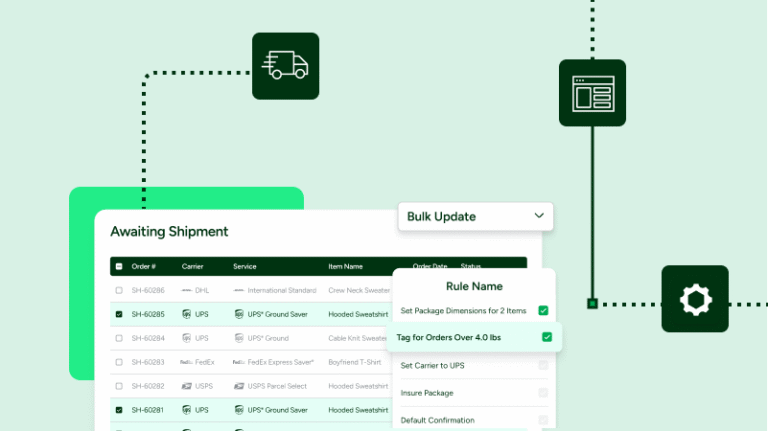
Top shippers set clear rules for which service to use:
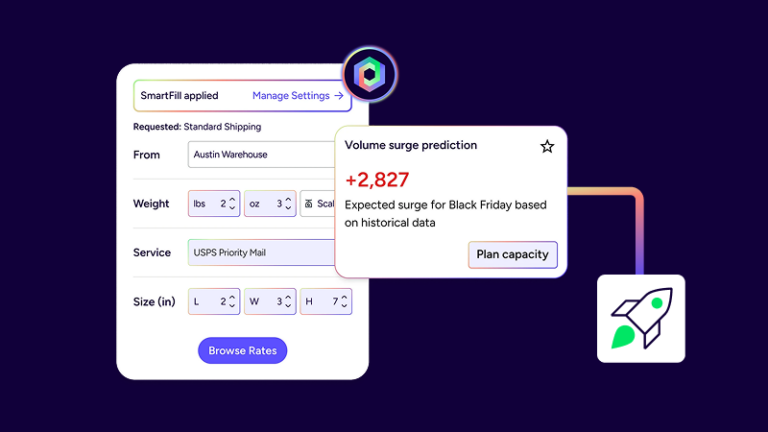
A USPS rate calculator can show you real-time costs before you print. ShipStation’s shipping calculator compares options instantly.
Flat rate shipping appeals to operations teams because it removes decision friction. But predictability comes at a cost.
Flat rate boxes work best when:
They’re often inefficient for lightweight or regional shipments. Overuse of flat rate is a common sign of under-optimized fulfillment.
Leadership teams should treat flat rate as a tool—not a default.
Retail USPS rates are designed for individuals. Businesses that ship at scale should never rely on them.
USPS commercial rates offer:
You don’t need huge volume to qualify. You just need a system in place. Small businesses now get USPS business shipping rates that used to be enterprise-only.
ShipStation applies these USPS discounts on every label—no manual work needed.
USPS as a margin stabilizer
USPS excels at:
For many businesses, USPS isn’t just a cost-saving carrier. It’s a stabilizing force that prevents cost swings as order mix changes.
The strategic mistake is over-optimizing for the lowest single rate instead of minimizing variance across all shipments.
Executives should watch for these warning signs:
Each signals a breakdown in system discipline—not a carrier problem.
USPS rewards structure, accuracy, and intention. Shippers who lock in packaging standards, automate service rules, and use commercial pricing beat those who chase rates or switch carriers on impulse.
Shipping strategy isn’t about finding the cheapest label. It’s about building a system that produces the cheapest outcome naturally.
Ready to lower your USPS shipping costs? ShipStation gives you commercial rates, automated service selection, and a built-in shipping calculator—all from day one.