Back
Back







































 Shipping Basics


The ecommerce retail space has come a long way in recent years. Just a few years ago, delivery expectations were low – customers expected to wait up to 10 days to have an item delivered. But slowly, expectations started changing. First, standard delivery options shortened to 3-4 days; then, expedited 2-day or next-day shipping raised the bar and are now the norm. Today, online shoppers want fast, cheap (or free) shipping options. This growing demand in customer delivery expectations has increased competition in the ecommerce space as retailers try to find expedited shipping at low cost.
Amazon is leading the pack with multiple free expedited shipping options for Amazon Prime customers. This has left other retailers with no choice but to look for faster and cost-effective ecommerce shipping solutions to navigate the fierce competition and stay ahead of the curve when it comes to managing customer expectations.
In this article, we’ll look at how consumer delivery expectations in ecommerce are changing, the benefits and challenges of these expectations for retailers, and some ways retailers can manage these.
Consumer delivery expectations for ecommerce are changing quickly and becoming more demanding by the day. One reason for this is the increasing competition in the ecommerce retail space. For ecommerce retailers, it’s crucial to understand how managing customer expectations can help your business.
Companies like Amazon continue to push the envelope with competitive faster delivery timelines. Today, Amazon offers free same-day delivery, next-day delivery, and 2-day delivery with their Prime membership. Now, customers have come to expect the same from other retailers, who have no choice but to implement similar systems if they want to stay competitive.
Another reason behind the change in consumer delivery expectations is because of COVID-19. As more and more people stay home, they’re increasingly shopping online to get what they would normally get in store. Our research shows that in 2020 online shoppers were willing to wait longer for shipment and they were also willing to pay more for express shipment.
Giving customers more control over the delivery process comes with several benefits to retailers, most significantly, the better managing of customer expectations. But, of course, it also has its fair share of challenges. Here are a few things to consider when deciding whether to implement a more customer-driven delivery process:
Advantages to Retailers
Disadvantages to Retailers
There are several measures that retailers can put in place to manage consumer delivery expectations and give them a certain degree of control over the delivery process. Here’s a rundown.
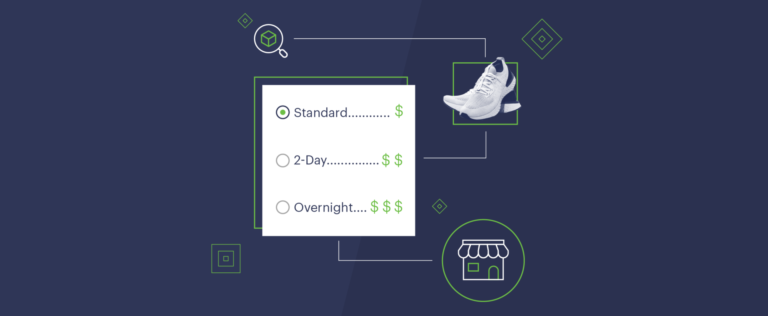
One way to manage your consumer delivery expectations is to offer multiple shipping options such as same-day, next-day, two-day, and standard shipping. This gives them more control over the delivery speed and price at which they want their packages delivered.
You can manage your consumer delivery expectations by offering free shipping over a certain spend. Your buyers will not expect very speedy deliveries with free shipping; they will likely be willing to wait for an extra day or two to receive their package. Though this is an expensive tactic, you can build part of the shipping cost into your selling prices to mitigate it.
Using time and price delivery incentives is another excellent way to manage consumer delivery expectations, especially during the holidays. An example of a time-sensitive incentive might be something like, “Order by December 15th to receive your package before Christmas.” A popular example of a price incentive is “Free shipping for purchases above $100.” This will help give your buyers a semblance of control while managing their expectations.
For the sake of your customers’ convenience, you should display delivery timelines and prices at checkout so they can choose the most appropriate shipping option. This will help then know what to expect before they make the purchase.
Another way to manage consumer delivery expectations is to share tracking information through automated messages; they can see where their package is and when it will be arriving. This will help mitigate any anxiety on the customer’s side and reduce pressure on your customer service team.
When you partner with wholesalers or warehouses in strategic locations, you can ensure that your orders don’t have to travel as far to reach customers around the world. This not only lowers your shipping costs but also guarantees faster delivery times.
Displaying cut-off time for each shipping option is a great way to manage consumer delivery expectations. Let your buyers know the latest they can make orders to get faster delivery times for same-day, next-day, or overnight shipping.
Though it may be your couriers’ fault, your customers will always hold you accountable for any delivery issues because they bought the product from you. You should take responsibility and resolve any problems with the courier as soon as you’re aware of them. Never leave your buyers to chase their order up or incur extra costs when you or your courier have made a mistake.
A big part of managing consumer delivery expectations involves streamlining your shipping process to avoid delays and ensure faster delivery. Integrating data with your shipping partners, improving your order processing systems, and having active customer support are some of the things you can do to meet your buyers’ expectations.
The ecommerce retail space is now well established and more customers are finding it increasingly convenient to shop online. That means consumer delivery expectations for faster shipping at no extra costs, along with the need for delivery flexibility, will only continue to grow.
By taking the above proactive steps to enhance consumer delivery expectations, you’ll be able to effectively manage customer expectations and keep them happy. Don’t forget that ShipStation can help – reach out to our support team and sign up for a free account now!