Back
Back







































 Shipping & Fulfillment


Ecommerce fulfillment is not a back-office task. It is a core operating system that ensures customer promises are kept, shipping costs stay under control, and frictionless growth remains possible.
Many businesses treat order fulfillment as a logistics problem to solve later. That approach works until shipping volume increases, channels multiply, and expectations rise. At that point, fulfillment decisions compound quickly. What once felt manageable becomes exhausting. Time is wasted, mistakes become common, costs increase, and processing is slowed.
These are not personnel problems. They are system problems.
In most cases, orders live in different systems. Shipping happens somewhere else. Tracking is scattered. No one sees the full picture. Teams spend their time switching between tools, copying addresses, printing labels one at a time, fixing avoidable mistakes, checking carrier rates, and driving to the post office. Days are filled with operational work rather than strategic decisions. Growth slows—not because demand disappears, but because fulfillment becomes the bottleneck.
Resilient ecommerce companies design fulfillment as infrastructure. They align inventory accuracy, warehouse workflows, carrier selection, and customer communication into a single system. This shift alone streamlines fulfillment by turning fragmented workflows into a scalable operation that serves as the foundation for everything that follows.
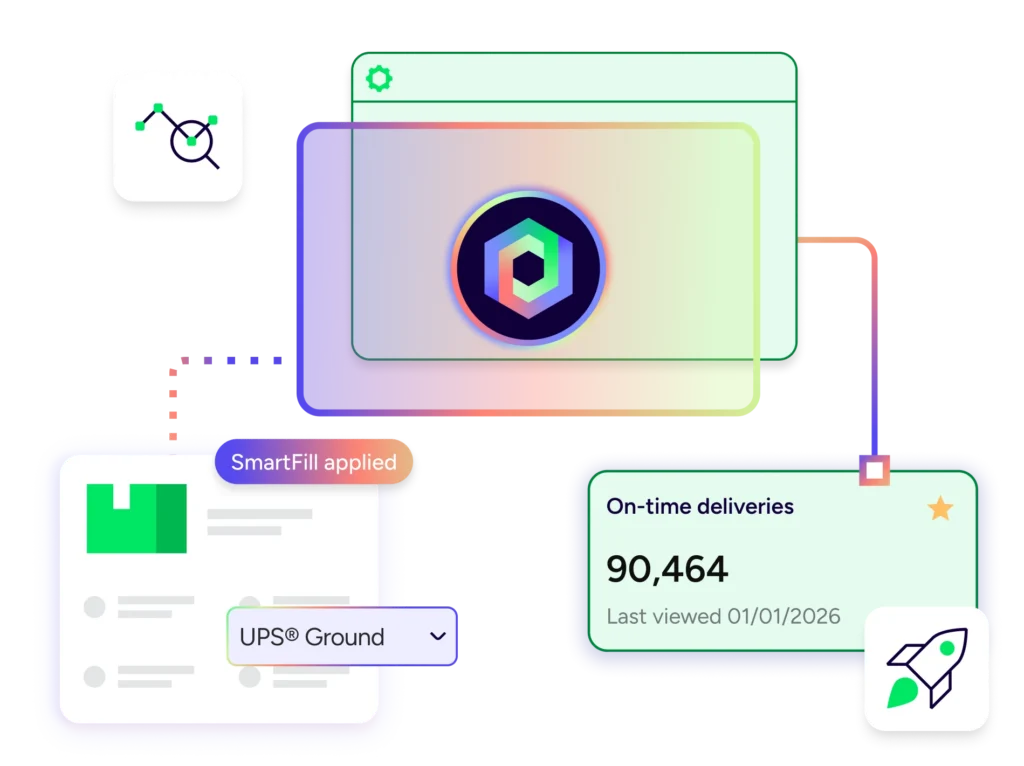
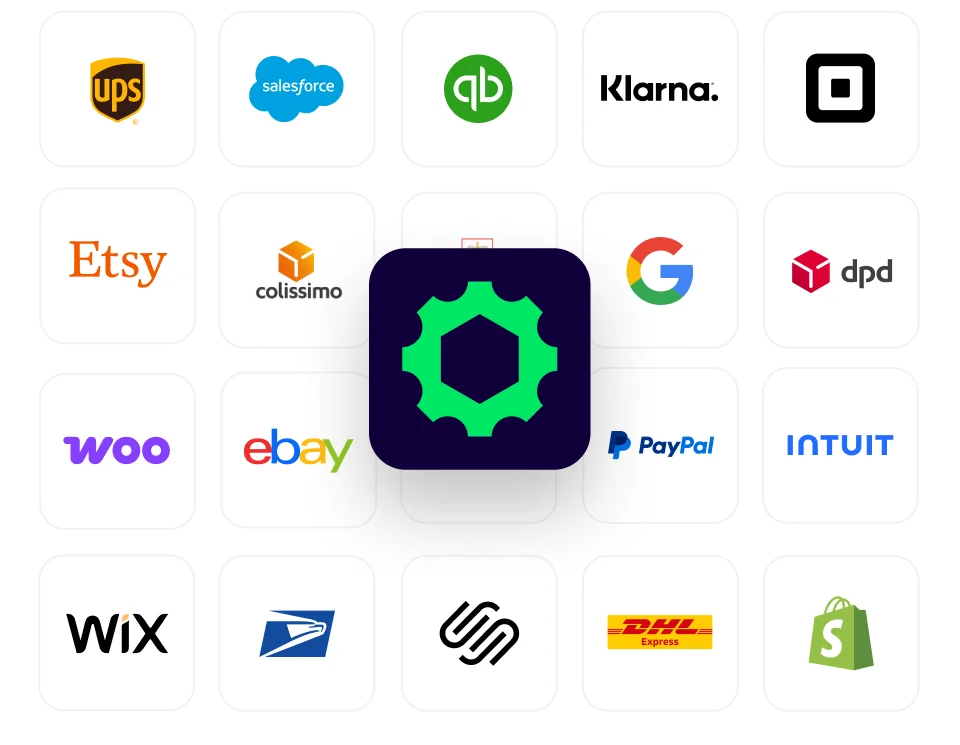
When all orders flow into a centralized order and shipping management platform, teams stop chasing information and start executing. Software integrates with marketplaces, stories, ecommerce 3PLs, and fulfillment providers, pulling orders from multiple selling channels into a single interface.
Orders are consolidated and standardized into a single list and view, regardless of source, and accounts can be easily accessed with a single login, allowing you to control your entire order fulfillment workflow in one place.
When orders, shipping status, and tracking all live in one place, fulfillment becomes predictable rather than reactive.
Manual fulfillment and one-by-one order processing rely on constant decision-making.
Which carrier? Which service? Which warehouse? Manually copying customer addresses into carrier sites works at low volume, but eventually it becomes impossible to keep up. Orders pile up. Shipping slips into evenings and weekends.
The business grows—but only by consuming more time.
Business automation changes the structure of work. Instead of processing every order as a one-off, automation rules are designed to handle common scenarios intelligently and consistently, so teams don’t have to. Shipping labels are generated in bulk from verified order data. Address validation happens automatically before shipments go out the door. Carrier services are selected based on rules rather than memory.
With the right software, teams can process hundreds of orders and transition from “we’re keeping up” to “we’re in control.” Scaling ecommerce order fulfillment doesn’t require working harder. It requires changing how work flows through the system.
Driving to the post office every day is a hidden cost that takes precious time and attention away from the business.
Carrier pickups remove this burden. Scheduling USPS, UPS, or FedEx pickups directly through a shipping platform turns shipping into a background task rather than a daily disruption.
Small changes like this matter. They return hours to your day, and time is one of the scarcest resources in a growing business.
Manual steps introduce risk into the order fulfillment process, as decisions vary by person and by day. When mistakes increase, the instinct is often to push the team harder. In reality, accountability comes from clarity. Who shipped what? When? With which service? From which location?
Without a system-level view, these questions are hard to answer.
Ecommerce fulfillment platforms provide activity logs, shipment history, standardized workflows, user permissions, and automation rules that ensure work follows defined paths. This reduces inconsistency, makes performance measurable rather than anecdotal, prevents small mistakes from compounding, and unlocks high-impact shipping insights.
Most importantly, it ensures packages are shipped out and delivered on time every time.
Growth should not require a proportional increase in effort. If doubling order volume calls for doubling headcount, fulfillment becomes a drag on margins and morale. The best shipping software allows ecommerce fulfillment to absorb more volume without constant intervention or additional resources.
Bulk label creation, automated routing, and centralized visibility allow teams to handle more orders with the same effort. This is where software stops being a convenience and becomes infrastructure. When teams can process hundreds—or thousands—of shipments in batches, fulfillment remains responsive even as demand rises.
Shipping costs erode margins gradually—one slightly overpriced shipment at a time. Finding the best shipping rate is critical for cost efficiency.
Manually comparing carrier rates for every order is unrealistic, especially when carriers frequently change their rates. As a result, teams default to familiar services, even when better options exist. Shipping decisions are no longer made strategically or executed consistently because checking alternatives takes too long.
Software shifts this behavior. It introduces structure, automation, and visibility—where small improvements compound over time.
Automated rate shopping compares real-time rates across multiple carriers for each shipment. It can select the lowest-cost option that still meets delivery requirements by rule rather than habit—without manual review.
That means fewer premium services used by default, better alignment between cost and delivery promise, and savings on every shipment, not just large ones. Even modest per-package savings add up quickly at scale.
Ecommerce fulfillment fails quietly at first. Then it fails loudly. The warning signs are familiar: too many tools, too much manual work, growing frustration, and shrinking time for strategic thinking. These are not growing pains to tolerate—they are signals to redesign the system.
Leaders who invest in centralized, automated order fulfillment systems reclaim time, reduce errors, and create space to grow. They spend less energy shipping orders and more energy building the business.
Fulfillment is not just about getting products out the door. It’s about creating the conditions for sustainable growth—and protecting leadership time to make that growth possible.
Sign up for a free trial of ShipStation to start building an ecommerce shipping operation that turns fulfillment from a daily struggle into a reliable system—one that scales with demand and supports the business instead of consuming it.