Back
Back











































 Shipping Basics


Dry ice is carbon dioxide in its solid form at or below -109º F. Because it converts from a solid state into a gas, it doesn’t thaw and risk ruining the packaging or contents. Apart from fog in Halloween punch bowls, dry ice is used to keep items such as medical supplies and food frozen at a stabilized temperature during transport.
Dry ice is good for keeping food such as steak or ice cream cold, but should not be used on things like live seafood. We have additional resources with more information on how to ship a package of with dry ice.
Dry ice should be bought the day it needs to be packed and shipped. Because of this, it’s best to buy dry ice in person. Luckily, major brands are widely available.
Dry ice begins the process of sublimation once its temperature climbs above 109º F. Use 5-10 lbs of dry ice to keep 10-15 quarts of goods frozen per 24-hour period. If you are shipping items for a longer duration, increase the amount of more dry ice used. Additionally, gel packs can also extend the life of dry ice and keep temperatures below freezing for longer.
Packing dry ice requires specific care, or it can become dangerous. First of all, dry ice needs to be properly ventilated. As carbon dioxide sublimates, it can cause an increase in pressure. An airtight container could cause expansion that leads to an explosion. However, the major danger of a sudden release of carbon dioxide is that it can be suffocating in a confined space.
Here’s how to pack dry ice:
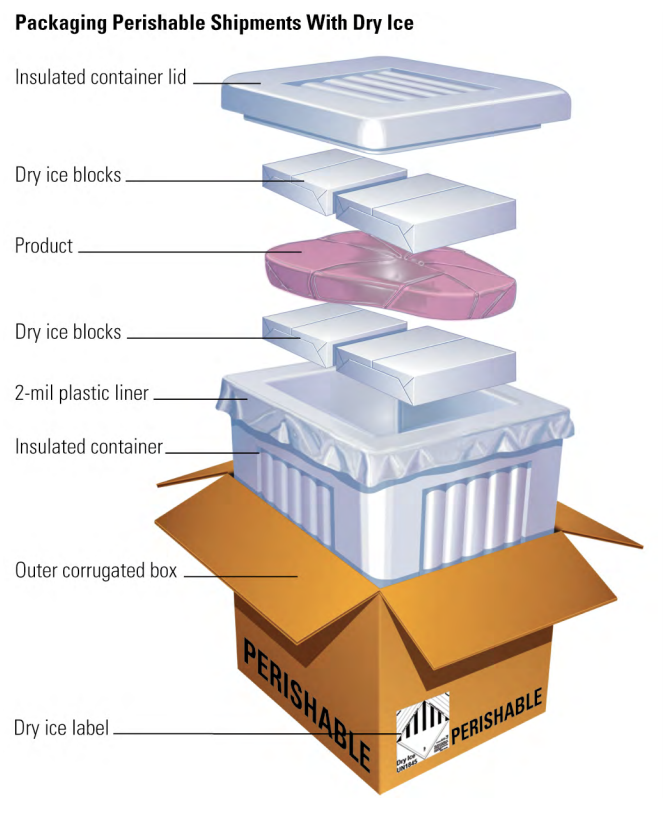
Any air shipment with FedEx, UPS, or USPS MUST include a Class 9 label specifically designating that the parcel contains dry ice. They are widely available for purchase and should be adhered to the label-side of the packaging.
For UPS Ground shipments containing dry ice, simply process these shipments to/from the 48 contiguous US states as you would any of your UPS Ground shipments. Just be sure to mark the packaging as having dry ice on the label-side of the package.
Their regulations differ depending on what you are shipping with the dry ice and how much. If you are shipping non-medical items, such as frozen food, the regulations differ if you are shipping over or under 5.5 lbs of dry ice. It is necessary to follow UPS’s guidelines directly.
International shipments containing dry ice may require the shipper to have a UPS International Special Commodities (ISC) contract. For more information, please contact the UPS Hazardous Materials Support Center at 1-800-554-9964, or visit the UPS Guide for Shipping Dangerous Goods Globally.
Shipping dry ice with FedEx has a few stipulations, to ship dry ice with FedEx, you need to have a Class 9 label to be adhered to the package with a maximum allowable amount of 200 kilograms of dry ice per parcel. For more information on shipping dry ice with FedEx, read their stipulations outlined in this blog.
USPS is restrictive of shipping dry ice, and allows domestic shipping of dry ice, but not international shipping.
Marking
Shipping dry ice can be expensive. Using express services can lead to abandoned carts or you paying far more than need be for shipping. And since food can already be tough on profit margins, making sure you keep costs as calibrated as possible is important. ShipStation now offers BigCommerce and Shopify sellers the chance to include live shipping rates to customers in checkout. You can also adjust this rate so you or your customers pay more depending on what the situation dictates. Taking another manual step out of the order process is a shortcut for everyone. Click here to find out more.