Back
Back






































 Carriers & Rates


UPS Ground offers predictability, reliability, and nationwide coverage—but predictability only creates value when paired with precision. Understanding UPS ground shipping rates requires more than reviewing a rate table. Shipping costs are shaped by dimensional pricing, UPS zone pricing, residential surcharges, and packaging decisions that compound over time.
At an executive level, UPS Ground must be governed as an operating system, not treated as a default shipping option. When managed intentionally—and paired with the right shipping platform—it becomes a stable, scalable component of a multi-carrier strategy that optimizes both cost and ground shipping delivery time.
UPS Ground is not built for improvisation. It operates around defined rules, zones, thresholds, and pricing mechanics. Businesses that align their operations to this structure extract value. Businesses that do not slowly lose margin without realizing why.
UPS Ground rewards:
ShipStation’s UPS integration is built to work within this structure, not against it. The platform exposes UPS Ground’s pricing mechanics during rate selection, surfaces potential surcharges before labels are created, and enables rule-based automation that prevents costly manual overrides. When you connect your UPS account to ShipStation, you gain access to deeply discounted commercial rates—often 70% or more off retail pricing—without the complexity of managing carrier relationships directly.
UPS zones determine the distance-based pricing structure for ground shipments. As distance increases, shipping costs rise—but not always in a linear manner. Understanding how UPS zones impact both price and ground shipping transit times is critical for forecasting delivery estimates and managing customer expectations.
Higher average zones often indicate over-centralized fulfillment, inventory misalignment, or missed opportunities for regionalization. Executives should review zone distribution as a health metric. Rising zone averages often precede rising shipping spend and longer delivery times.
UPS ground maps provide visual representations of delivery zones from your fulfillment centers. These maps help identify coverage patterns and reveal opportunities for strategic warehouse placement. Even limited fulfillment decentralization—such as positioning top SKUs closer to high-volume regions—can materially reduce costs while improving delivery estimates.
ShipStation’s reporting dashboard provides zone analytics that help identify these optimization opportunities, showing you exactly where your packages are going and what zones are driving your highest costs.
Understanding weight-based pricing and package size pricing is essential before selecting a carrier. While many businesses rely on historical averages or base rate tables, real-time rate calculation prevents margin erosion and reveals the true cost of each shipment.
A UPS rate calculator provides visibility into actual costs before commitment. These tools account for package weight and dimensions, origin and destination UPS zones, residential fees versus commercial rates, and applicable surcharges.
ShipStation’s rate shopping functionality acts as a comprehensive calculator, comparing shipping quotes across UPS, USPS, FedEx, and other carriers in real time. The platform shows you exactly what each carrier will charge—including all surcharges—before you commit to a label.
A UPS ground shipping calculator is more than a convenience tool—it’s essential for cost governance. Manual calculation is error-prone and slow, especially when evaluating multiple carriers for each shipment.
ShipStation surfaces a UPS ground quote alongside competitive alternatives instantly. When an order comes in, the platform automatically calculates rates based on package dimensions, destination address type, and current fuel surcharges. The system then applies your automation rules—routing lightweight residential packages to USPS when cheaper, or using UPS Ground for heavier commercial deliveries where it excels.
Accurate shipping quotes require more than entering weight and destination. Dimensional weight pricing, residential surcharges, and fuel adjustments all affect final cost. Without a real-time UPS ground quote system, businesses often discover unexpected charges only after labels are printed.
ShipStation eliminates quote uncertainty by displaying all costs upfront, ensuring the rate you see at label creation matches what you’ll pay on your invoice.
UPS enforces dimensional weight pricing aggressively. Once dimensional pricing applies, cost is no longer tied to product weight but to packaging inefficiency. This is a key component of weight-based pricing that catches many businesses off guard.
This creates a structural risk:
Leadership teams often miss this because dimensional impact spreads across thousands of shipments. Package size pricing becomes the hidden driver of escalating shipping costs.
ShipStation helps enforce packaging discipline by displaying dimensional weight warnings during order processing. When a package triggers dimensional pricing, the system alerts your team before the label is created—giving you the chance to choose a smaller box or switch to a more cost-effective carrier.
UPS residential surcharges apply to any delivery to a residential address, adding a flat fee per package. This is one of the most consistent cost increases businesses face, particularly in direct-to-consumer operations.
The difference between residential fees and commercial rates can be substantial:
ShipStation’s address validation automatically identifies whether a destination is residential or commercial, helping you anticipate costs accurately. The platform also enables you to set automation rules: for example, route residential deliveries under 1 pound to USPS (which doesn’t charge residential surcharges), while keeping heavier residential packages on UPS Ground when the weight-based pricing advantage outweighs the surcharge.
Beyond residential fees, other common surcharges include:
Of these, large package and additional handling surcharges are the most dangerous. They apply per package and can exceed the base shipping cost entirely.
ShipStation’s pre-label cost visibility ensures you see the full freight pricing—including all surcharges—before committing. This allows for a true UPS rate comparison that accounts for total cost, not just base rates.
When shipments exceed standard parcel dimensions or weight thresholds, UPS ground with freight pricing becomes relevant. This is distinct from standard ground service and requires different cost modeling.
A UPS ground freight quote typically applies to:
Freight pricing operates on different rules than parcel shipping. Rates are often class-based rather than zone-based, and dimensional factors shift dramatically. Businesses shipping at this scale should request quotes directly, though ShipStation can help manage these larger shipments through integrated freight solutions.
For shipments in the 70-150 pound range, determining whether to use standard ground or freight can be complex. Understanding UPS ground weight cost thresholds helps identify the breakpoint where freight pricing becomes more economical than multi-package parcel shipments.
ShipStation’s built-in logic can flag these threshold scenarios, prompting you to consider freight options when appropriate—preventing situations where you’d pay more by splitting a heavy order into multiple parcels.
The path to the cheapest UPS shipping requires understanding when UPS Ground delivers the most value for your specific shipment profiles. Different package characteristics, destinations, and business requirements create scenarios where various carriers excel.
UPS Ground typically provides excellent value for:
The strategic advantage comes from leveraging each carrier’s strengths for specific scenarios. ShipStation performs automatic rate comparison across UPS, USPS, FedEx, and other carriers for every shipment, showing you side-by-side costs and delivery times.
The platform’s negotiated rates—including up to 70%+ off UPS retail pricing—ensure you’re seeing the true most cost-effective option for each shipment, not just comparing published rates. This multi-carrier approach maximizes savings while maintaining service quality.
Manual decision-making introduces inconsistency. One team member upgrades a shipment “just in case.” Another chooses UPS Ground because it is familiar. Over time, these micro-decisions distort cost.
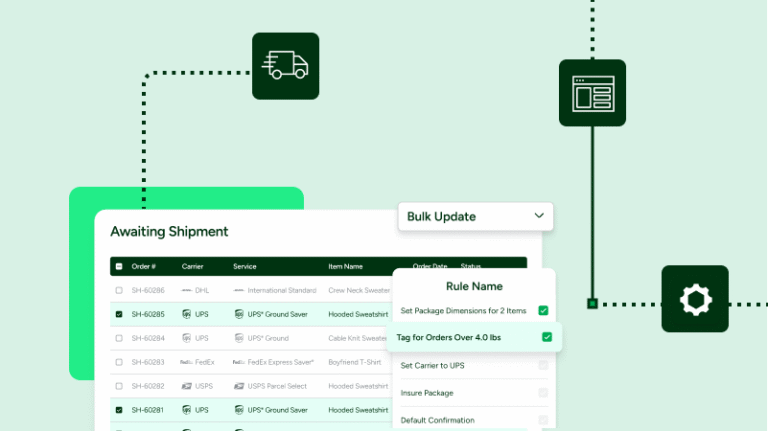
ShipStation’s automation rules convert intent into execution:
Automation enforces discipline without slowing fulfillment. Shipping quotes translate into predictable actual costs because the system consistently applies the same logic—eliminating the variability that comes from human judgment.
Understanding UPS ground delivery time is essential for customer satisfaction. UPS Ground typically delivers in 1-5 business days depending on distance, but actual transit times vary by origin-destination pair.
Ground shipping delivery time directly impacts customer experience. ShipStation provides accurate delivery estimates at checkout and in shipping notifications. The platform’s carrier integration surfaces real-time transit time data, so customers know exactly when to expect their orders—whether it’s 2-day delivery to a nearby zone or 5-day delivery across the country.
This visibility prevents the most common customer service issue in ecommerce: “Where is my order?” When delivery estimates are accurate from the start, customer anxiety decreases and support tickets drop.
UPS Ground should not exist in isolation. In mature operations, it plays a defined role within a broader carrier portfolio that ShipStation manages seamlessly.
UPS Ground often serves best as:
The mistake is expecting UPS Ground to solve every domestic use case. ShipStation’s multi-carrier approach ensures you’re always using the right carrier for each specific shipment, not forcing all orders through a single service.
UPS Ground costs cannot be governed by invoice review alone. By the time invoices are analyzed, you’ve already incurred the cost.
Effective governance requires:
ShipStation provides this visibility where it matters most: at the moment of decision. As they select a box size, the system warns them if dimensional weight will apply. And as they choose a carrier, automation rules guide them to the most cost-effective option.
UPS Ground is not expensive. Indiscipline is expensive.
When packaging is standardized, UPS zones are monitored, and surcharges are anticipated, UPS Ground delivers what it promises: reliable delivery at predictable cost. When treated casually, it quietly erodes margin.
Understanding the full picture—from UPS zone pricing to residential fees, from weight-based pricing to delivery time management—enables executives to manage UPS Ground as an operating system. It should be governed, measured, and intentionally deployed rather than accepted as a default shipping choice.
ShipStation transforms UPS Ground from a cost center into a competitive advantage. The platform’s deeply discounted rates, automated decisioning, and comprehensive visibility tools ensure you’re extracting maximum value from every shipment. The path to the cheapest UPS shipping isn’t about negotiating lower base rates—it’s about eliminating waste, preventing surcharges, and making intelligent carrier decisions at the point of fulfillment.
ShipStation’s UPS integration delivers:
See how much you can save on UPS Ground and other carriers. Start your free 30-day trial of ShipStation today—no credit card required.